Modernity meets tradition.
Thanks so much for buying a pickle weight.
Here are a few recipe ideas to start you off fermenting. Each makes a large (approx 750ml) jar. You can find more recipes and inspiration in my weekly newsletter.
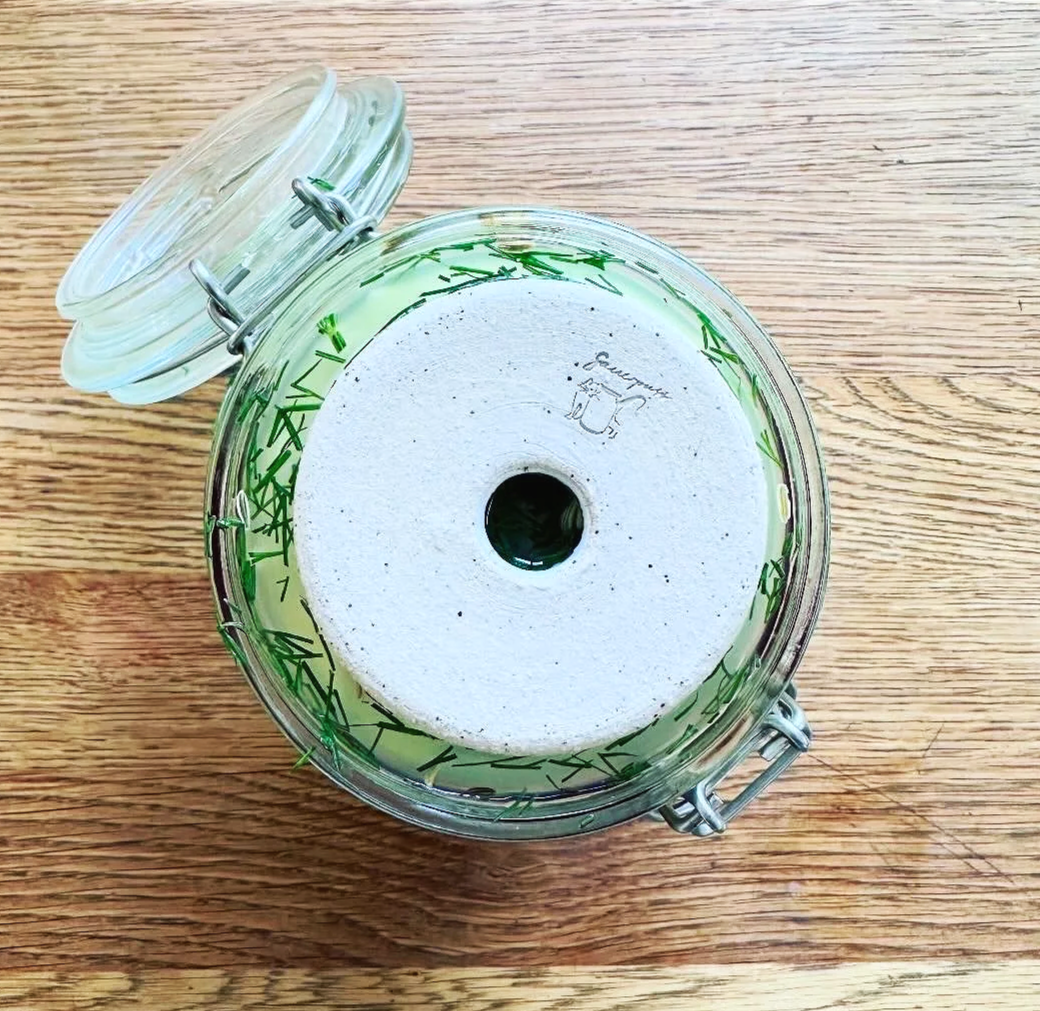
Sauerkraut
Kraut is many people’s introduction to the world of fermentation. It’s easy and infinitely adaptable. You can use this shred, weigh, salt, pack, ferment method with any veg you like.
Ingredients
1 head white cabbage
caraway seeds (optional)
salt
Method
Quarter the cabbage and shred it finely.
Weigh your shredded cabbage. Calculate 2.5% of this weight and add that amount of salt. Toss well, adding 1 tbsp caraway seeds if desired.
Leave for 30 mins or massage firmly until the cabbage has softened slightly and a small puddle of brine has collected in the bottom of the bowl.
Pack the cabbage tightly into a clean jar and pour in any brine left in the bowl. Place your weight on top, pushing down so everything is submerged in brine.
Leave at room temperature for 1-3 weeks, opening the jar occasionally for gas to escape and to taste the cabbage. When it has reached a level of sourness that you find pleasing, move the jar to the fridge where it will keep indefinitely.
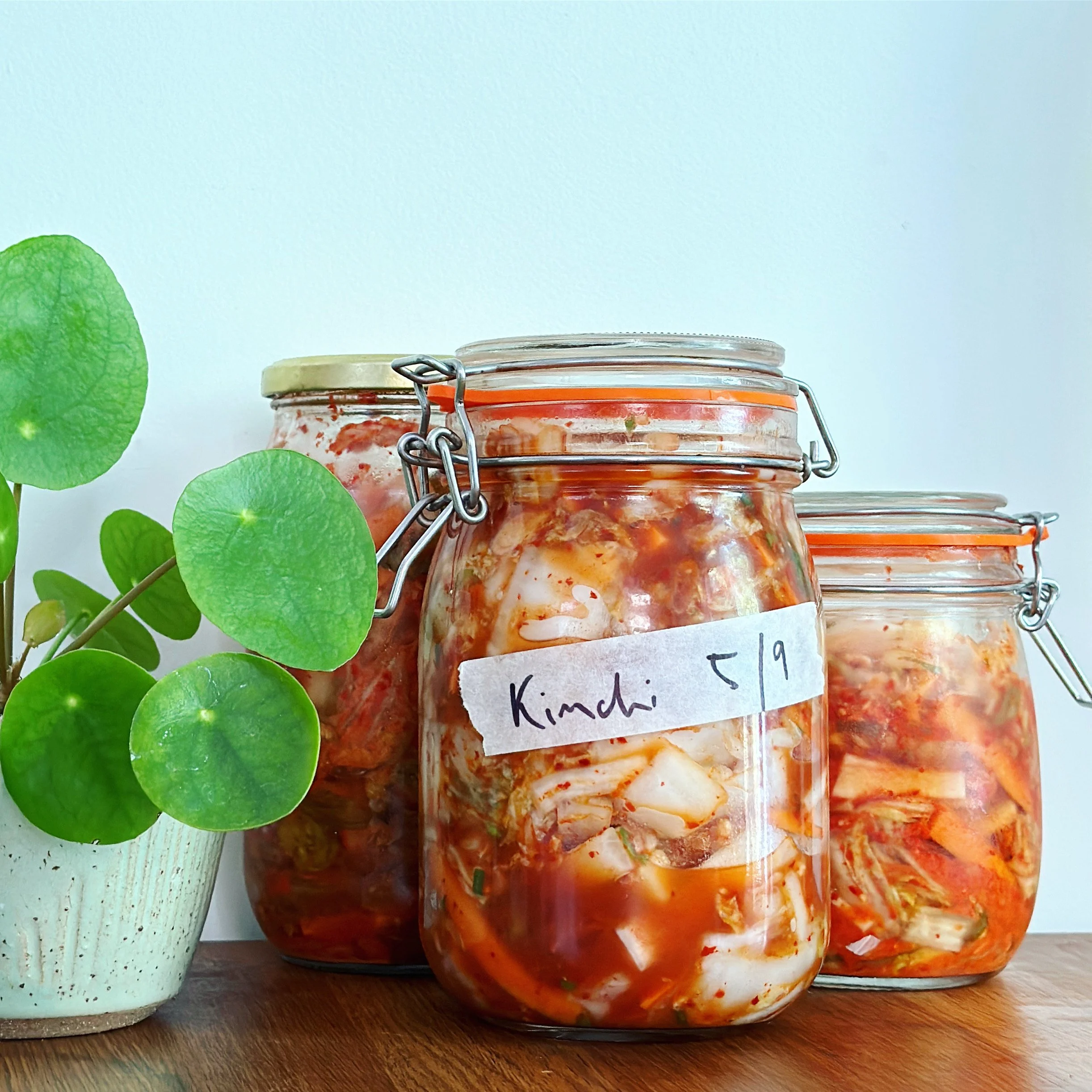
Kimchi
This Korean classic is a little more complicated but totally worth it.
Ingredients
1 head Chinese/Napa cabbage
40g flaky sea salt
100g mooli (approx 1/3)
1 carrot
10g glutinous rice flour (optional - see note)
1⁄2 inch ginger
6 cloves garlic
1 tsp sugar
2 tbsp gochugaru Korean chilli flakes (or to taste)
3 tbsp fish sauce (for a veggie option replace with 2 tbsp soy sauce and 1 tbsp miso)
4 spring onions
Method
Slice the cabbage in half through the root and firm white part, stopping about halfway up where the leaves begin to get frilly. Get your thumbs into the opening and pull the cabbage in half. Doing it this way keeps the frilly inner leaves more intact than slicing through the whole thing. Also, I find it is deeply satisfying in an ASMR kind of way. Use the same method to divide the halves lengthways again into quarters.
Slice the cabbage quarters into bitesize pieces. I like them quite chunky, maybe an inch and a half. Smaller, more shredded pieces will make a more homogenously textured kimchi. It’s completely up to you.
Put the pieces of cabbage in a bowl, add 100ml or so of water, toss to dissolve the salt and set aside for 90 minutes – 2 hours.
Peel and cut the mooli and carrot into batons. Again, I like them quite chunky to provide crunch. More matchsticky bits will make a more evenly textured kimchi. You do you. Add them to the cabbage and mix through. Occasionally come back and toss the vegetables again to make sure everything gets equal exposure to the brine which is produced.
Meanwhile put the glutinous rice flour in a pan and add 80ml cold water. Whisk to combine then bring to a boil over a medium heat. It will thicken and look like wallpaper paste. Set aside to cool.
Peel and crush the garlic and ginger. Add them to the rice flour porridge along with the gochugaru, fish sauce (or soy and miso) and sugar. Alternatively just blend the rice flour porridge with the other ingredients in a food processor.
Finely slice the spring onions. Add to the paste and set aside until needed.
Once the cabbage has been brining for a couple of hours you will notice that it has wilted and shrunk. The other veg will be less visibly affected but will also have given out some water. Drain them in a colander over the sink and rinse thoroughly. Rinse the bowl too. Taste a little bit of cabbage. A hint of salt is fine but you don’t want loads. Give everything a squeeze to remove as much water as possible but don’t manhandle it too much or you will make the leaves overly floppy. Return the veg to the bowl.
Add the paste to the cabbage, gently massaging the to evenly distribute (you can use gloves to go this if you like, I would recommend it). Pack into a clean jar along with any liquid remaining in the bowl. Place your pickle weigh on top and seal the jar. Put the jar on a plate or tray to catch any leakage and leave at room temperature, out of direct sunlight.
Check the kimchi every day, opening the jar to let the gas escape and tasting a little bit. It will be pretty active in the first couple of days so be careful when opening it. Don’t wear you best silk blouse basically. When it is as sour and funky as you like (anywhere from 2/3 days to 2/3 weeks), move it to the fridge. This won’t stop the fermentation but will slow it right down. The kimchi will keep in the fridge indefinitely.
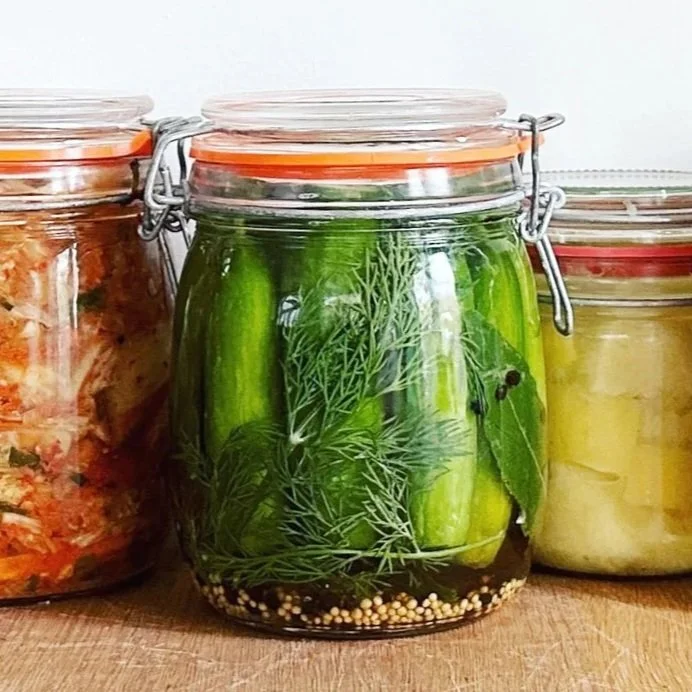
Pickled cucumbers
You can pickle any whole veg or large chunks using this method.
Ingredients
4% brine
Optional but recommended flavourings: a few dill fronds, 2/3 garlic cloves (peeled but whole), mustard seeds, allspice berries, black peppercorns, coriander seeds (approx 1 tbsp spices total)
2 bay leaves (fresh or dried)
10(ish) baby cucumbers
Method
Make a 4% brine - ie a brine using 4% of the water weight in salt. 16g salt dissolved in 400ml water should be plenty for a 750ml jar.
Put the bay leaves in the bottom of your jar and add the dill, garlic, spices etc. if using. The flavourings are optional but the bay leaves are essential as they contain tannins which keep your pickles crunchy.
There are two ends to your cucumbers. You can remove the stalk end or not - it’s an aesthetic decision. I quite like to leave it on as it gives the finished cucumbers a recognisable cartoon pickle look and provides a useful “handle” for extracting them from the jar. But the opposite end - where the blossom was - must be removed as it contains an enzyme that will make your pickles go mushy and no-one likes a mushy pickle. Just a tiny little slice, a few millimetres is fine.
Add the cucumbers to the jar, packing them vertically.
Pour over the brine, add your pickle weight on top, and seal the jar.
The cucumbers will take between 3 days and a couple of weeks, depending on whether you like them to retain a little of the sweetness of fresh cucumber or be very tart. Delis in New York tend to sell two types: “half sour” and “full sour” which are fairly self explanatory. They are made by the same method, just left to ferment for different amounts of time. Leave them at room temperature, somewhere out of direct sunlight, “burping” the jar and tasting every day. Move the cucumbers to the fridge when they suit you. They should stay crunchy for several months.