
Sauerkraut
A classic sauerkraut is most people’s gateway drug to the world of fermentation. It’s easy, delicious and infinitely variable.
Here’s my recipe. For more, sign up to my weekly newsletter.
These quantities make roughly a 750ml/1l jar depending on the size of your cabbage but feel free to scale up or down.
Ingredients
1 head white cabbage
sea salt
caraway seeds (optional)
Method
Cut the cabbage into quarters lengthwise and cut out the hard cores. Don’t throw them away though - we’ll use them as pickle weights later.
Put a large bowl on a scale and set it to zero. Then finely shred each cabbage quarter, adding it to the bowl as you go. If you have a mandoline it can come in useful here. If not then a sharp knife and some patience is fine.
Take note of the weight of the cabbage (it will probably be between 800-1200g). Calculate 2.5% of that weight and add this in sea salt, e.g. if the cabbage weighs 1kg (1000g) then you need 25g salt.
Add the salt to the cabbage and toss well. After just a few seconds you’ll notice the shreds of cabbage begin to feel damp as the salt draws out water. Leave for between 30 minutes and overnight, depending on your schedule.
Once the cabbage has sat for a while there should be a small puddle of brine at the bottom of the bowl. You don’t need loads but there should be at least two tablespoons-worth - if things are looking a bit dry, give the cabbage a good massage until you have a little more brine.
Add approximately 1tbsp caraway seeds (if using) and toss to distribute them evenly.
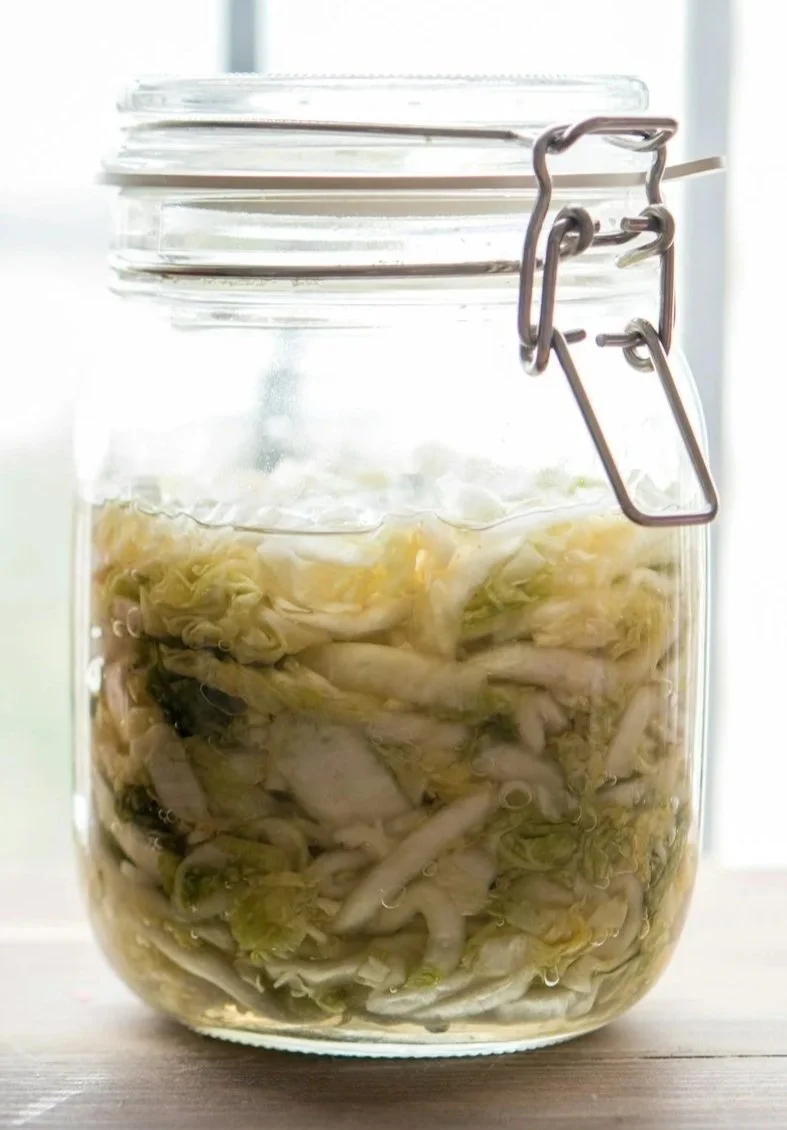
Put the cabbage in the jar and add the brine. There should be enough brine so that when you push down firmly on the cabbage, brine rises up around it and covers it. Use a glass or ceramic pickle weight, a plastic bag filled with water or the cabbage cores you saved from earlier to keep the cabbage pushed under the brine. Ideally when you shut the lid it will keep this weight in contact with the cabbage.
Put the jar somewhere at room temperature but out of direct sunlight and leave it. Every few days open it up to let out any gas that has collected and to taste a little kraut. When the kraut has reached your preferred degree of tartness, move to the fridge. This will probably take between one and three weeks.
Notes
The caraway is a very traditional partner for cabbage, both cooked and fermented, but is totally optional. I’ve included a few other suggestions below. But this basic method covers a world of possibilities and I hope you’ll experiment.
Sauerkraut will keep in the fridge for months and tends to stay crunchy for a long time. If you prefer a softer texture massage the cabbage really well before putting it in the jar.
If Ifs And Ands Were Pots And Pans
These are a few of my favourite kraut variations. All will work well with 2.5% salt.
Fermented slaw: combine your shredded cabbage with grated carrot and thinly sliced onions.
Curtido, a central American version includes cabbage, carrot and onion as above but also oregano and jalapenos. It’s great in tacos.
Red kraut: use a red cabbage instead of white and include a couple of teaspoons of the sweet spices you’d use if you were braising it, e.g. cinnamon, star anise, crushed juniper berries. A grated apple and/or beetroot is a good addition too. Alternatively red cabbage and beetroot flavoured with crushed garlic and grated horseradish is a delicious accompaniment to cold meats.
Carrot kraut: at least two days a week my lunch is hummus on toast topped with some form of carrot kraut. I’ve always got a jar in the fridge, usually made with garlic, chopped herbs (dill and tarragon are current favourites although if you have carrots with nice bushy green tops then these work well too and have a lovely fresh, grassy flavour) and whatever seeds are in the cupboard. Sunflower, pumpkin, sesame and poppy all work well separately or together.